

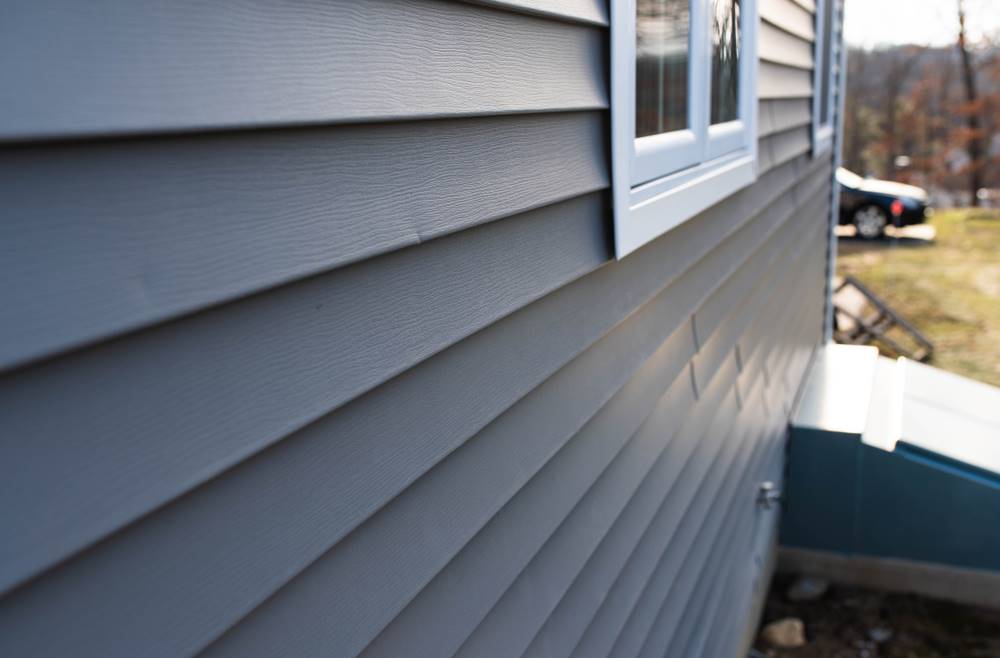
Plastic siding is a manufactured product, and comes in unlimited color choices and styles. Historically vinyl sidings would fade, crack and wear over time, requiring the siding to be replaced often. However, newer vinyl options have improved and resist damage and wear far better. Note that vinyl siding is sensitive to direct heat from grills, barbecues or other sources. It has been criticized by some fire safety experts for its high sensitivity to heat. This sensitivity can make it easier for a fire to jump to neighboring houses when compared to materials such as brick, metal or masonry. Unlike wood though, vinyl siding does not provide additional insulation for the building, unless an insulation material has been added to the product.
Unfortunately vinyl siding has a potential environmental cost. While vinyl siding can be recycled, it produces toxic dioxin gases when burned. Also if dumped in a landfill, plastic siding does not break down quickly. Vinyl siding is also considered one of the more unattractive siding choices by many, and although newer options and proper installation can eliminate this complaint, vinyl siding often has visible seam lines between panels and generally do not have the quality appearance of wood, brick, or masonry. The fading and cracking of older types of plastic siding compound this issue.